 Decks
ありがとう Note the combination of "o" and "u", which is pronounced as a long "o". It's a result of to/と + u/う in this example.: Tae Kim's Japanese Grammar flashcard
↑ Back to deck← PreviousNext →Random card
ありがとう
Note the combination of "o" and "u", which is pronounced as a long "o". It's a result of to/と + u/う in this example.
arigatou: thank you
Card 4 of 2,076 in Tae Kim's Japanese Grammar.
Studying this deck in Decks
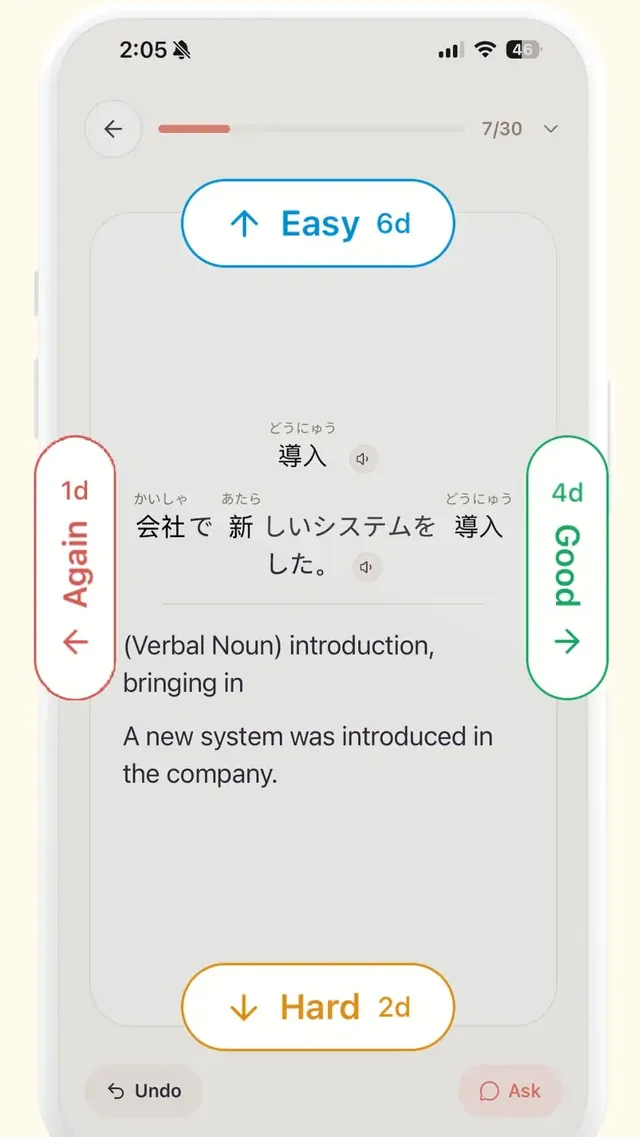
After each card you rate it Again, Hard, Good or Easy, and the rating sets when it comes back. Tae Kim's Japanese Grammar has 2,076 cards in the app; this site shows the first 100.
More from Tae Kim's Japanese Grammar
こんにちは
Note that the Japanese "ha"-character (は) is pronounced "wa" in this case.
おはよう
The combination of "o" and "u" is usually pronounced as long "o". In Japanese, this can result from various character combinations (yo/よ + u/う in this example).
ohayou: good morningこんばんは
Again note that the Japanese "ha"-character (は) is pronounced "wa" in this case.
ありがとう ございます
"arigatou gozaimasu" is a more polite way to say thank you. The "z" is pronounced as soft "s".おはよう ございます
"ohayou gozaimasu" is a more polite way to say good morning.すみません
sumimasen: excuse me. It can also be used to say "sorry".