 Decks
おいしい Double vowels (ii in this case) are pronounced long. Note that the "ii" in this case results from two different Japanese characters: shi/し + i/い.: Tae Kim's Japanese Grammar flashcard
↑ Back to deck← PreviousNext →Random card
おいしい
Double vowels (ii in this case) are pronounced long. Note that the "ii" in this case results from two different Japanese characters: shi/し + i/い.
oishii: tasty
Card 95 of 2,076 in Tae Kim's Japanese Grammar.
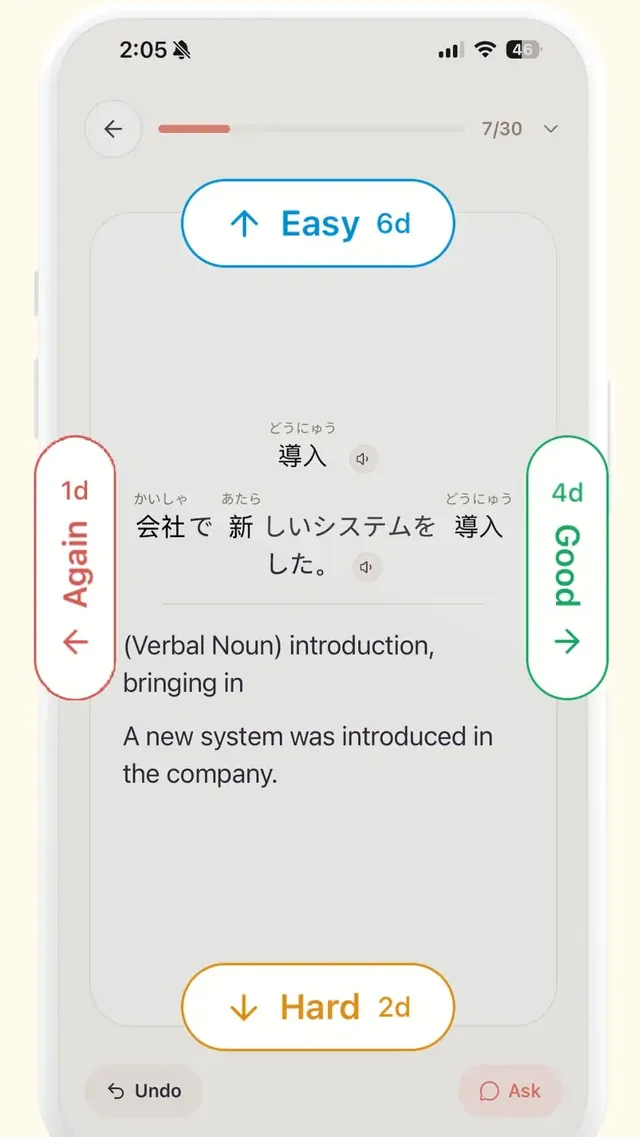
Studying this deck in Decks
After each card you rate it Again, Hard, Good or Easy, and the rating sets when it comes back. Tae Kim's Japanese Grammar has 2,076 cards in the app; this site shows the first 100.
More from Tae Kim's Japanese Grammar
おいしくない
Not tastyおいしくなかった
oishikunakatta: Was not tasty. Listen closely: This sentence can sound like a question, so it can also mean: [Oh, this dish] was not tasty? Or: Wasn't this tasty? - depending on the context. The main meaning is "was not tasty."